Milk bottle labels: built for the bottling line, crates and cold chain
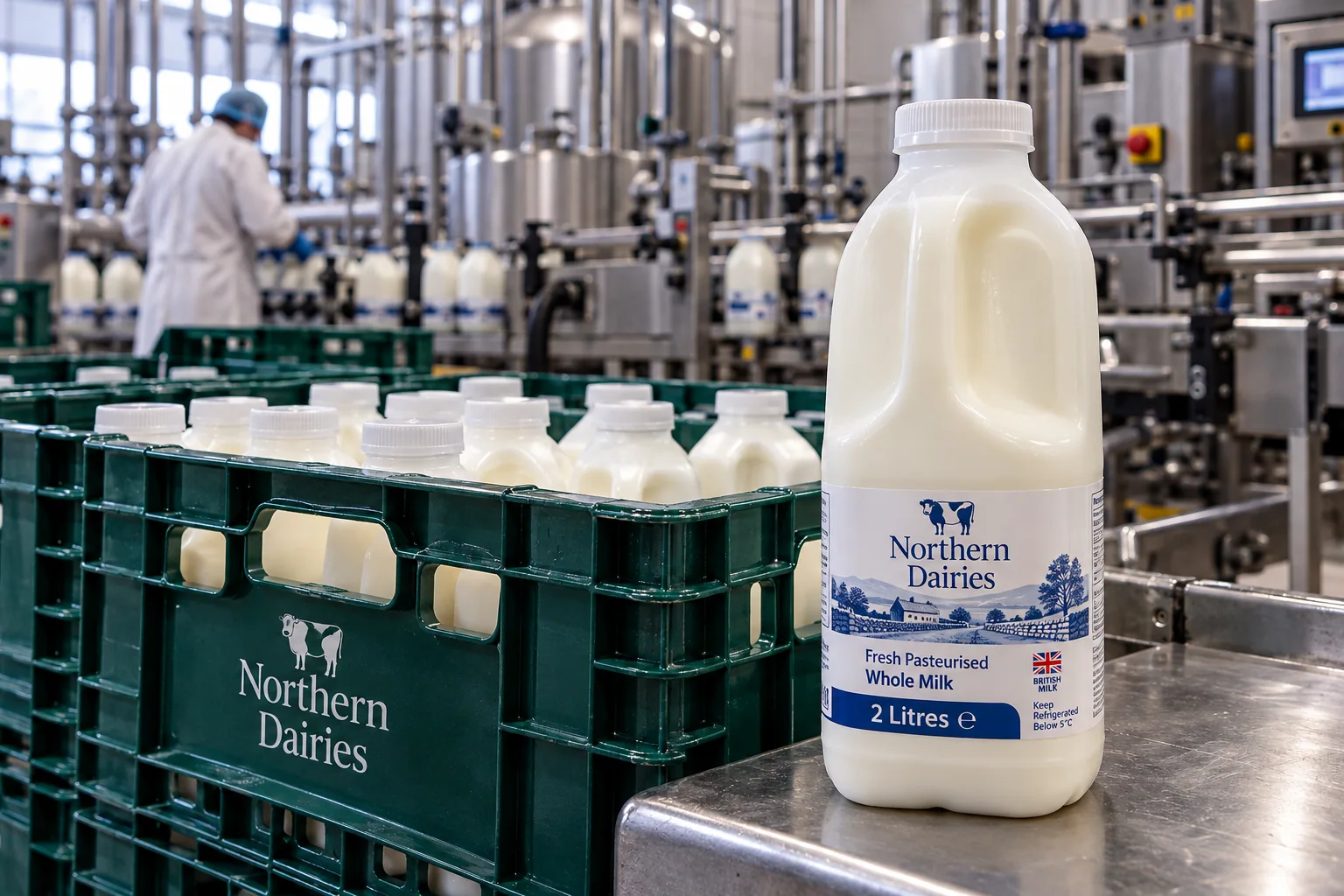
The label has to survive far more than the journey around the bottle. A practical dairy construction takes account of bottle condensation, rough handling in crates and the humidity surrounding the labelling machinery.
Protective lamination. A suitable film laminate helps shield the print from scuffing, rubbing and moisture as filled bottles are handled and moved through plastic crates. We have worked with 23-micron PP laminate in dairy applications.
UPM Raflatac RH1 adhesive. This strong permanent rubber-based hot-melt adhesive is designed for cold environments and moist surfaces where high initial tack matters. It is a candidate for challenging HDPE bottle applications, subject to testing on the actual bottle and line.
PET release liner. A moisture-stable film backing avoids the humidity-related dimensional changes and weakening that can affect paper liners. This helps keep reels dependable on demanding automatic labelling lines, although reel handling and storage still matter.
Exact material combinations, adhesive suitability, laminate, application temperature and production-line settings are specified and trialled for each application.
Fictional branding illustrates genuine types of work. The photographs are illustrative unless described as genuine production photography.
Regional dairies
For milk bottles travelling through cold, wet bottling and crate-handling environments, the laminate, RH1-style high-tack adhesive and moisture-stable PET release liner each solve a different part of the problem. The final specification needs trials on the actual bottle and machinery.
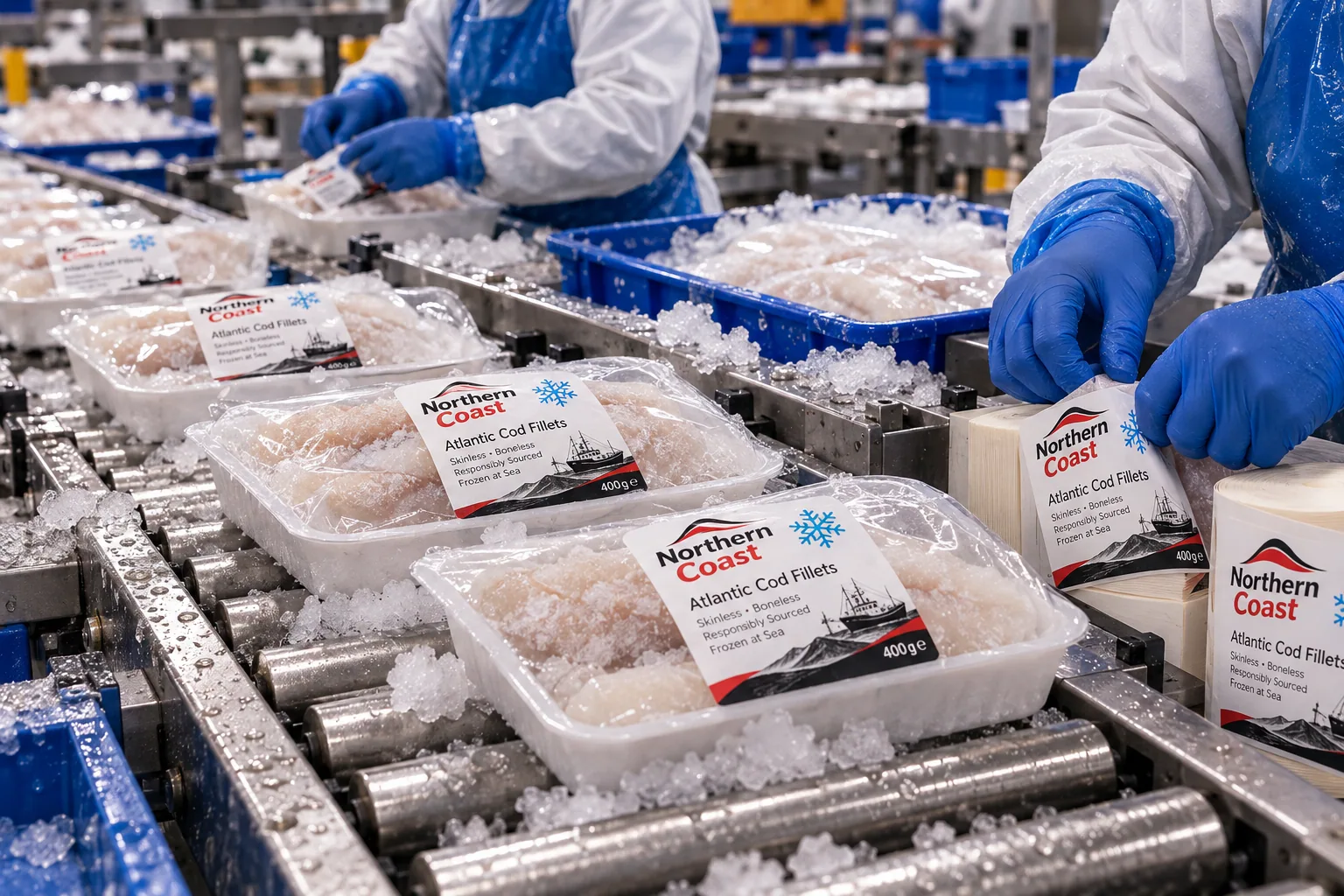
Frozen seafood packaging
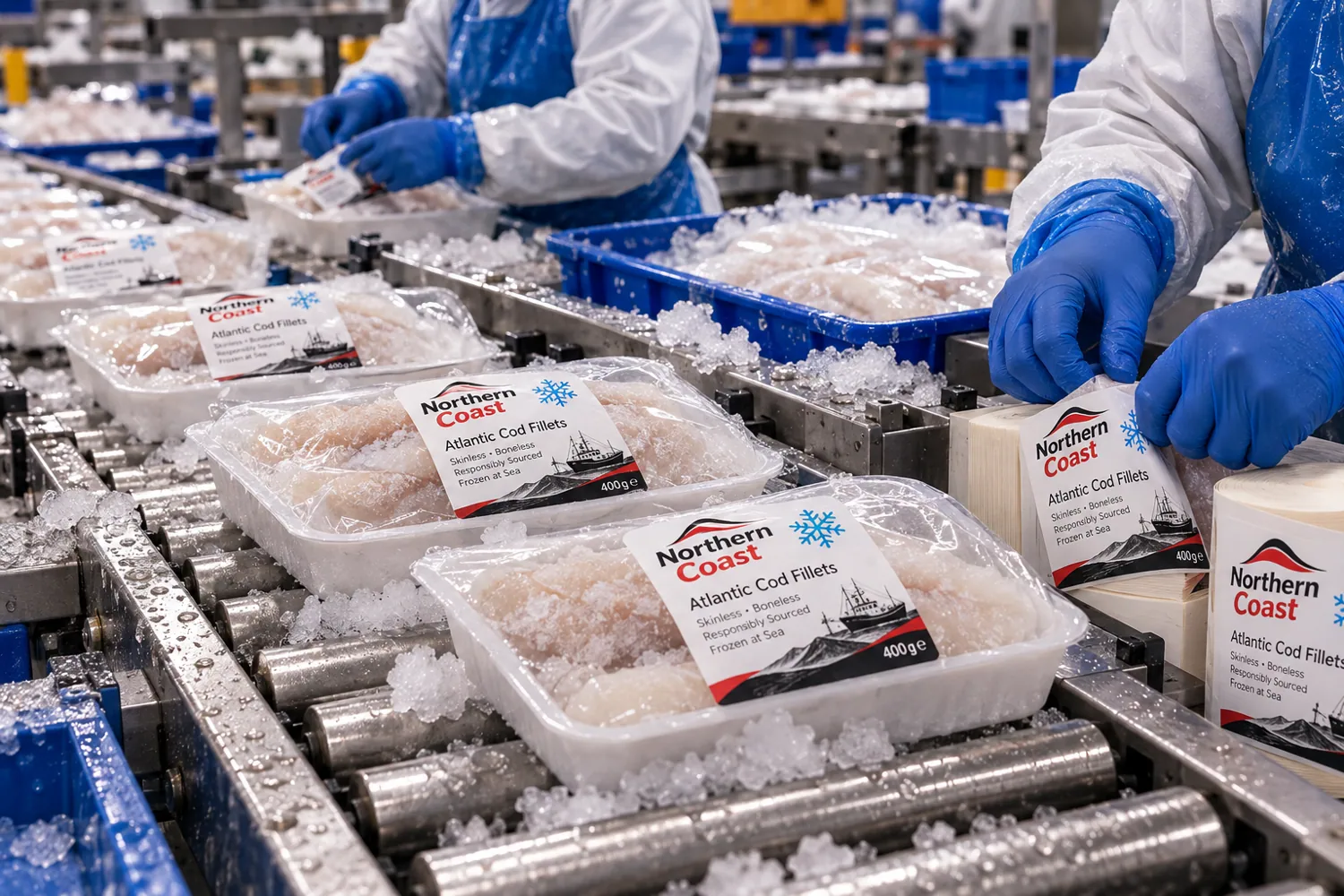
Check the actual pack temperature and surface before choosing a cold/wet adhesive construction.
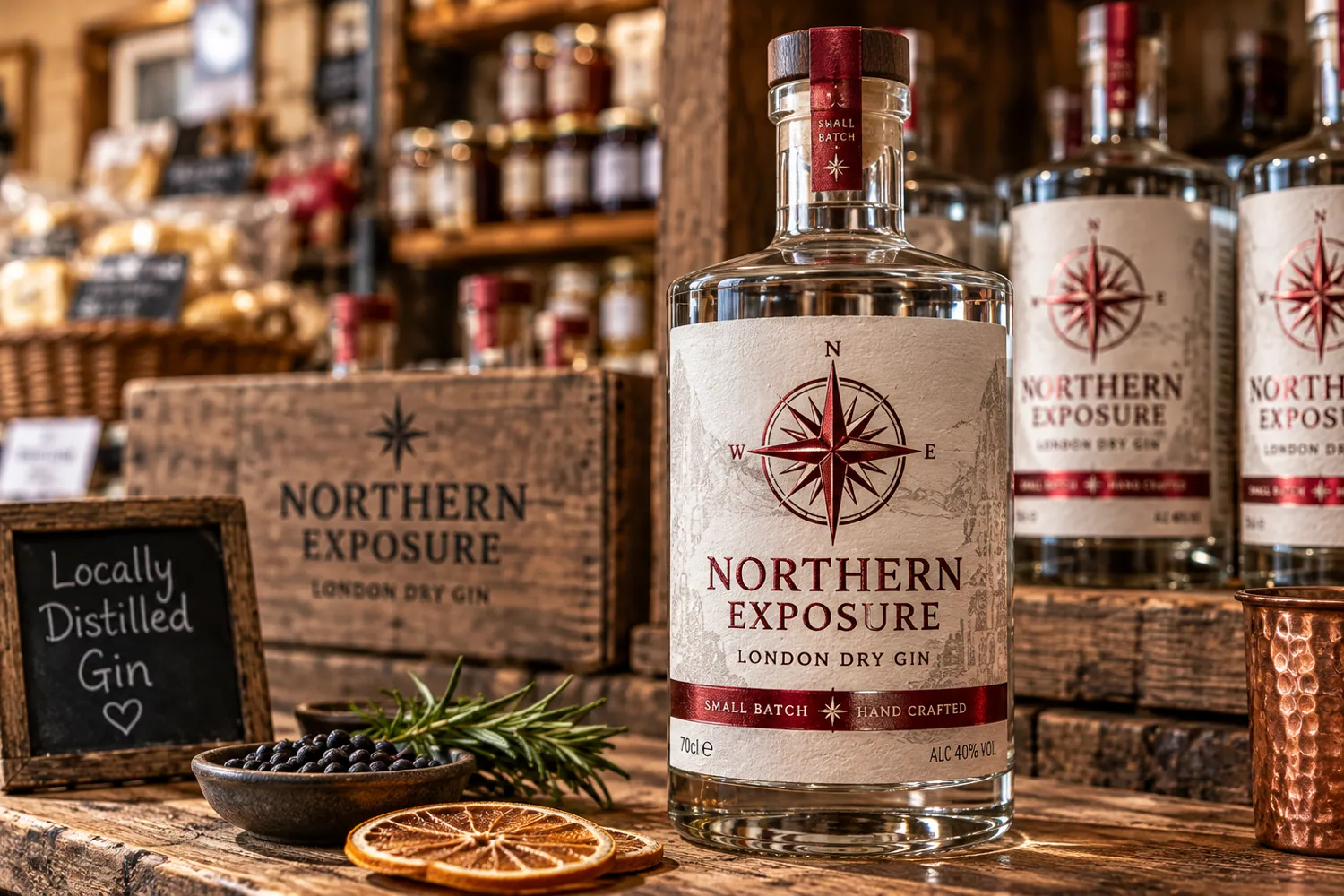
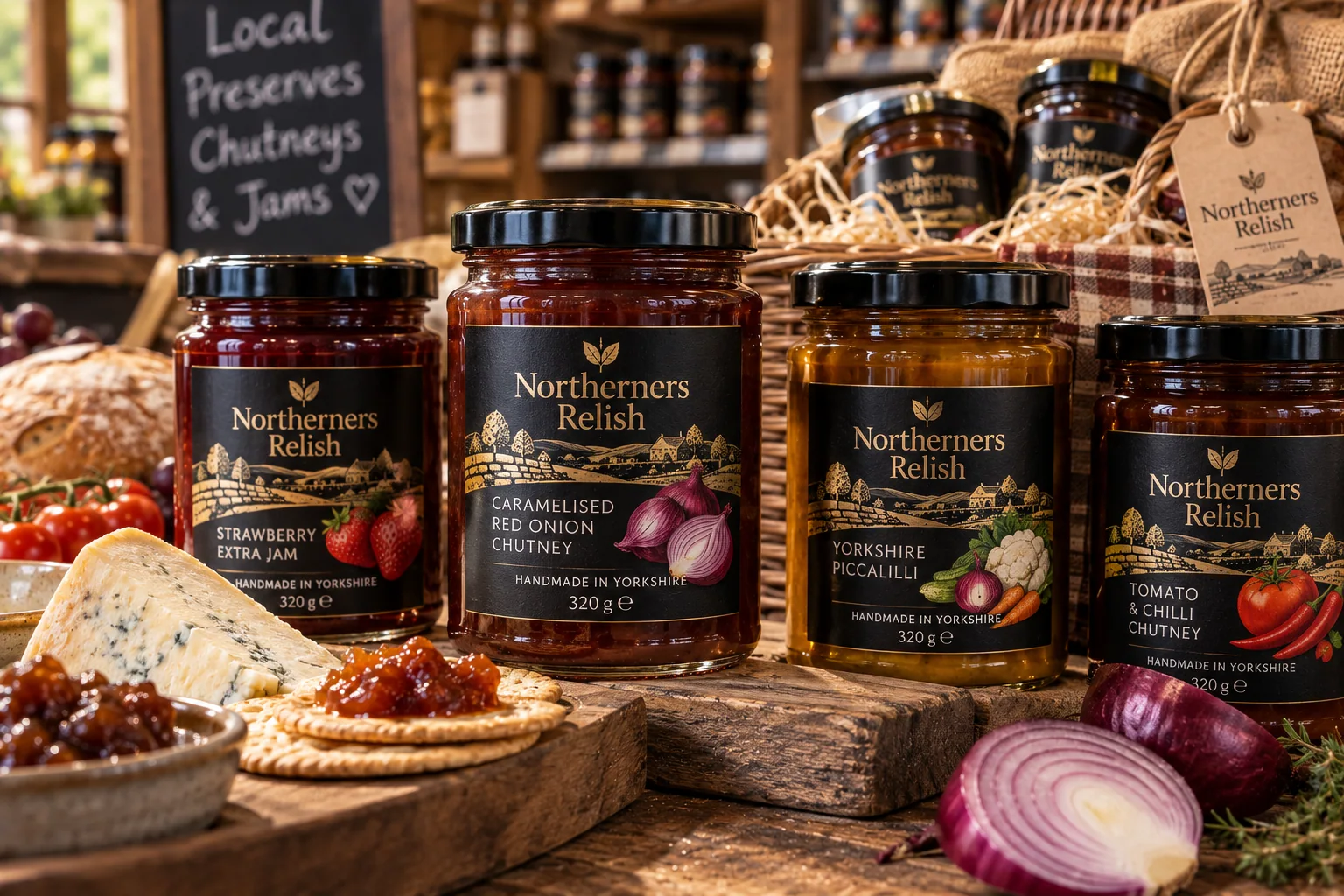
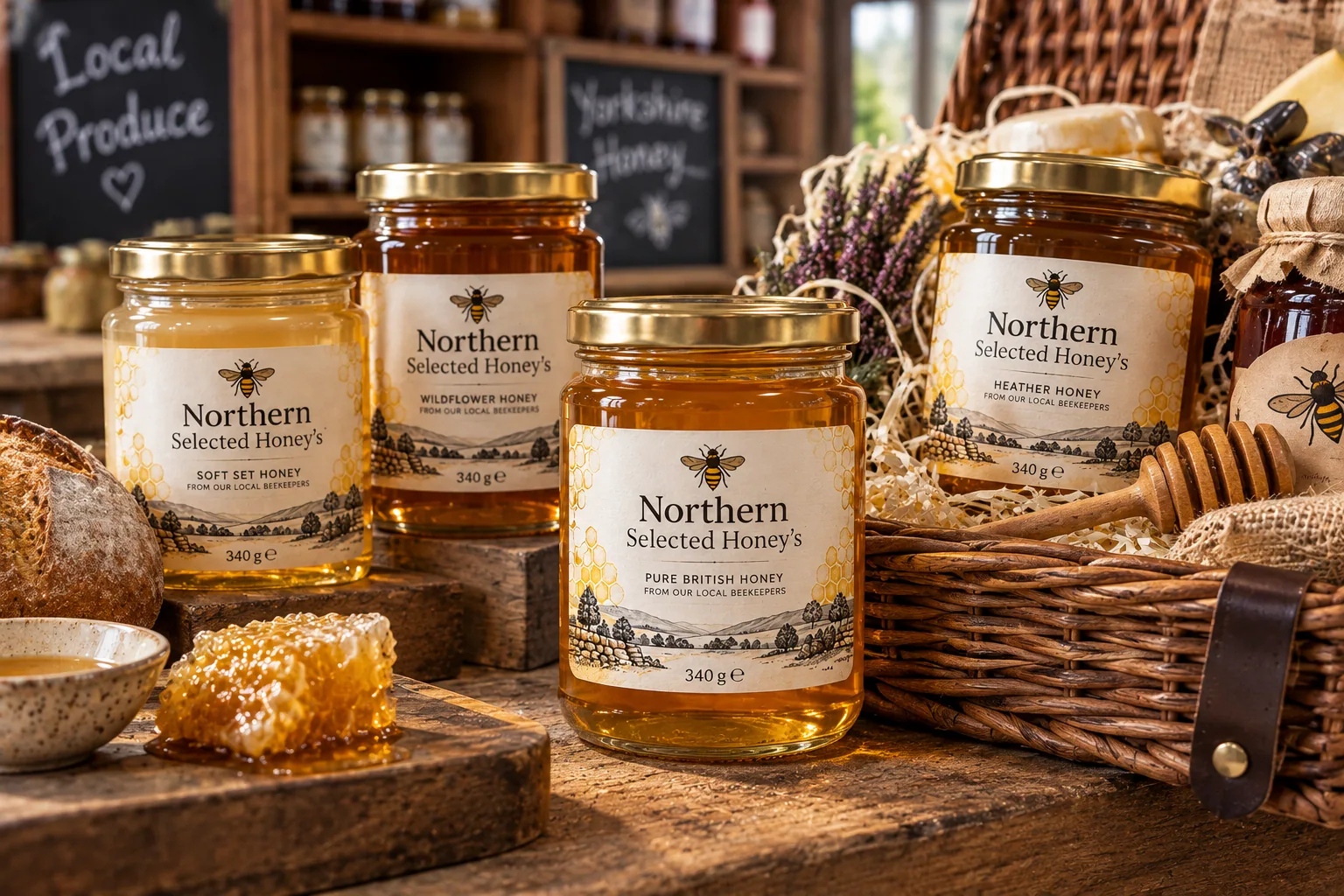
Premium spirits and craft preserves
Paper texture, label shape, colour, foiling and variable product information can be balanced with the packaging environment.
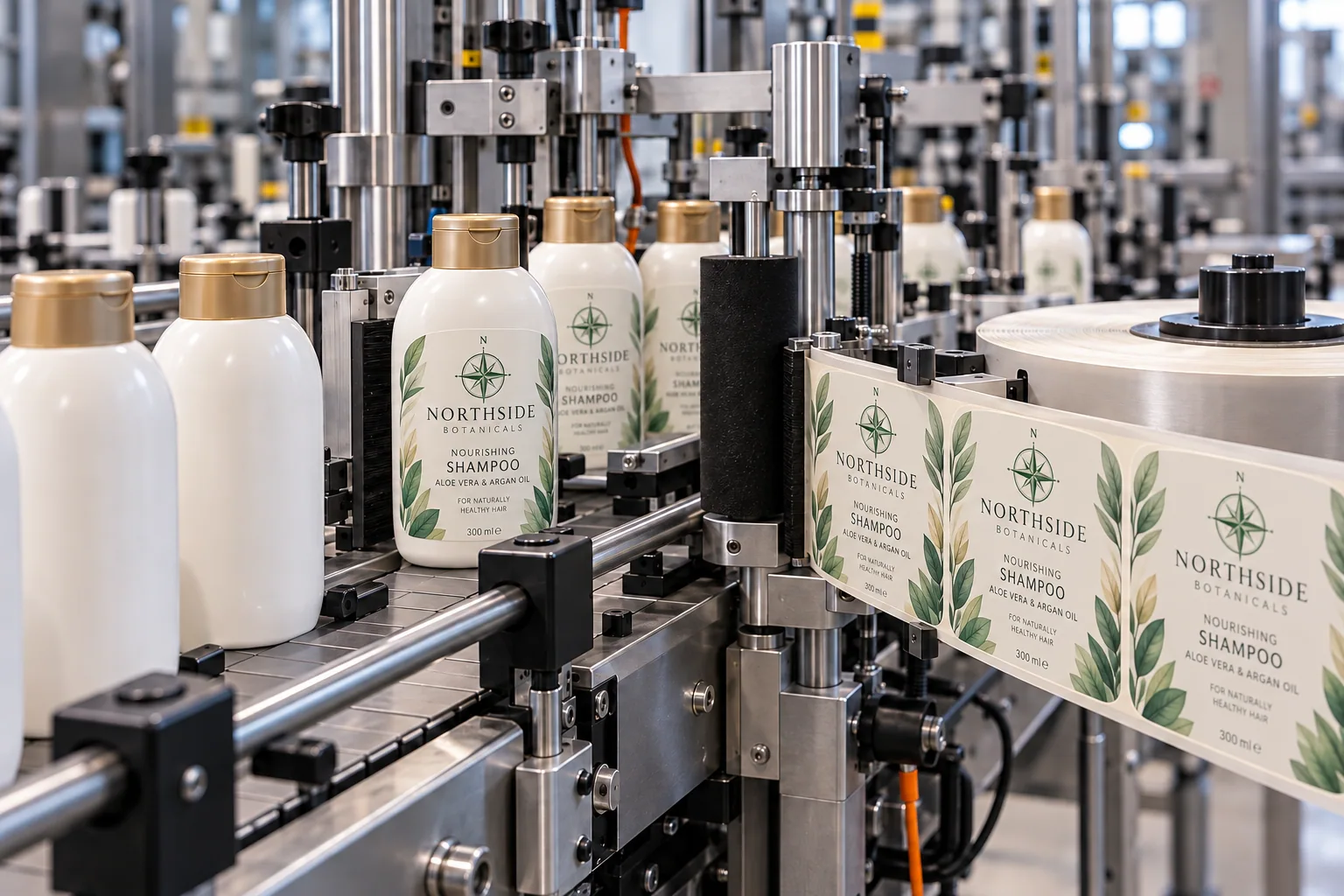
Cosmetics without screenprinted bottles
Keep bottles undecorated until filling and apply the right variant label close to distribution; replace affected artwork rather than disposing of preprinted bottle stock.
Dairy bottles and labelling machinery.Cold-chain packaging.Textured decorative finishes.Plain bottles plus separately printed labels.Food label variants.Retail label range consistency.
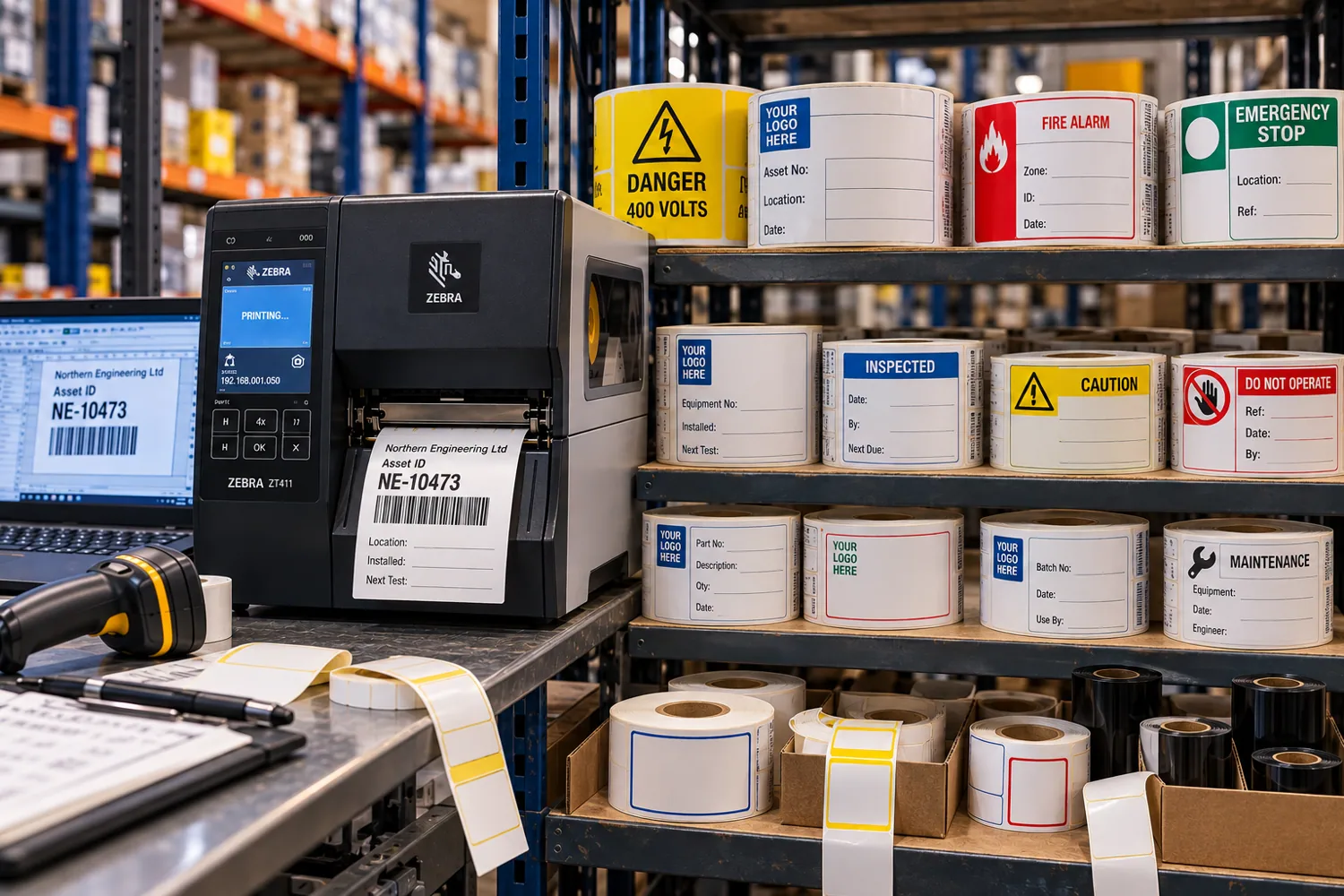
Real converting and specialist identification
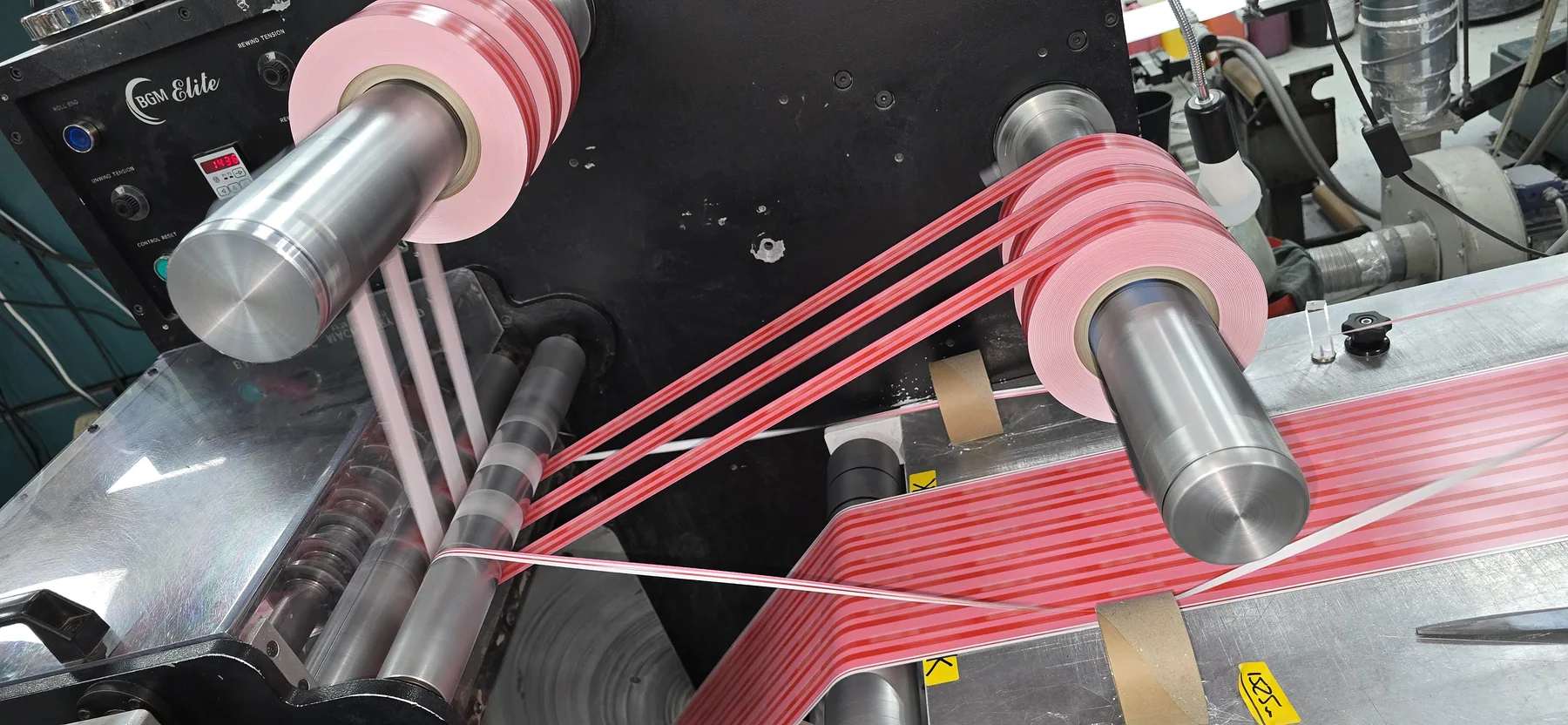
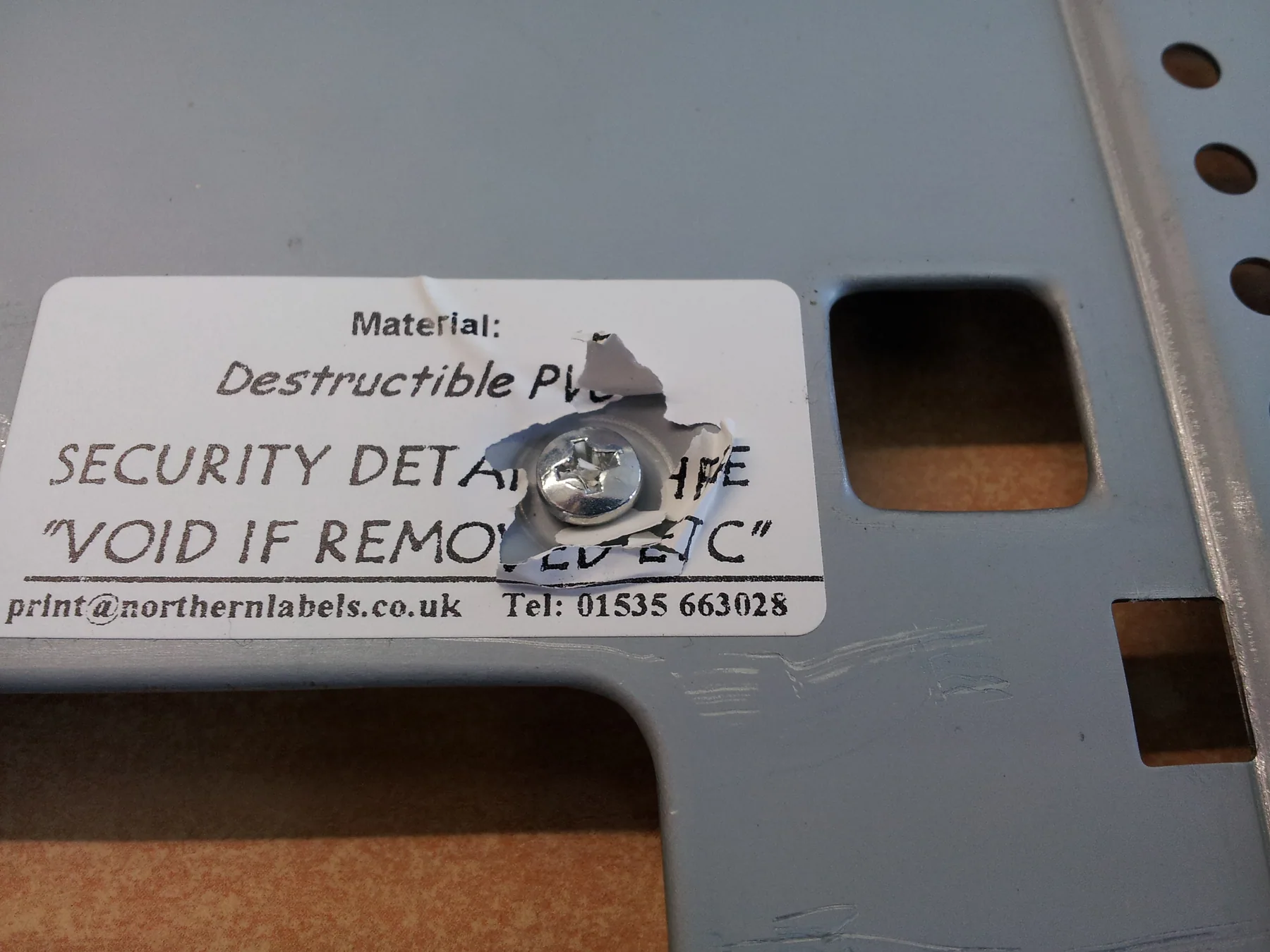
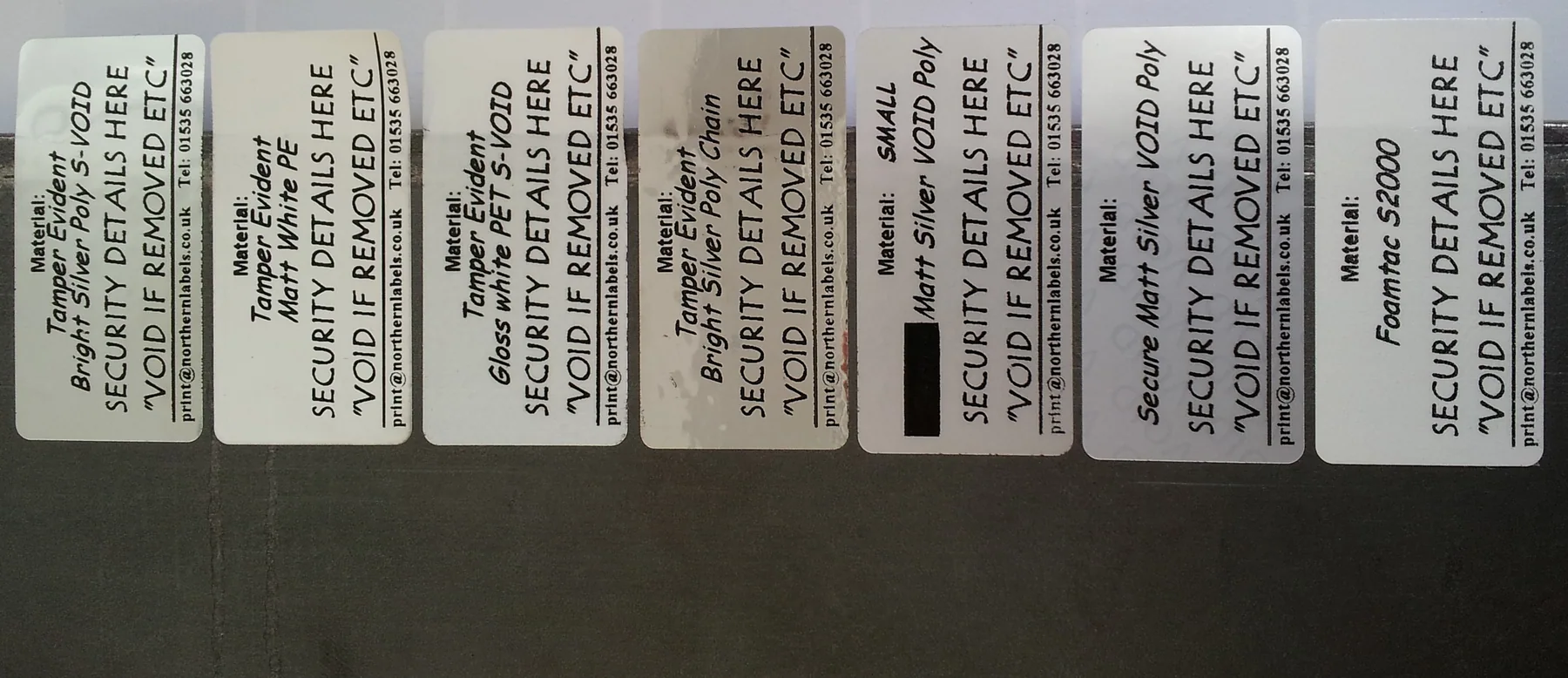
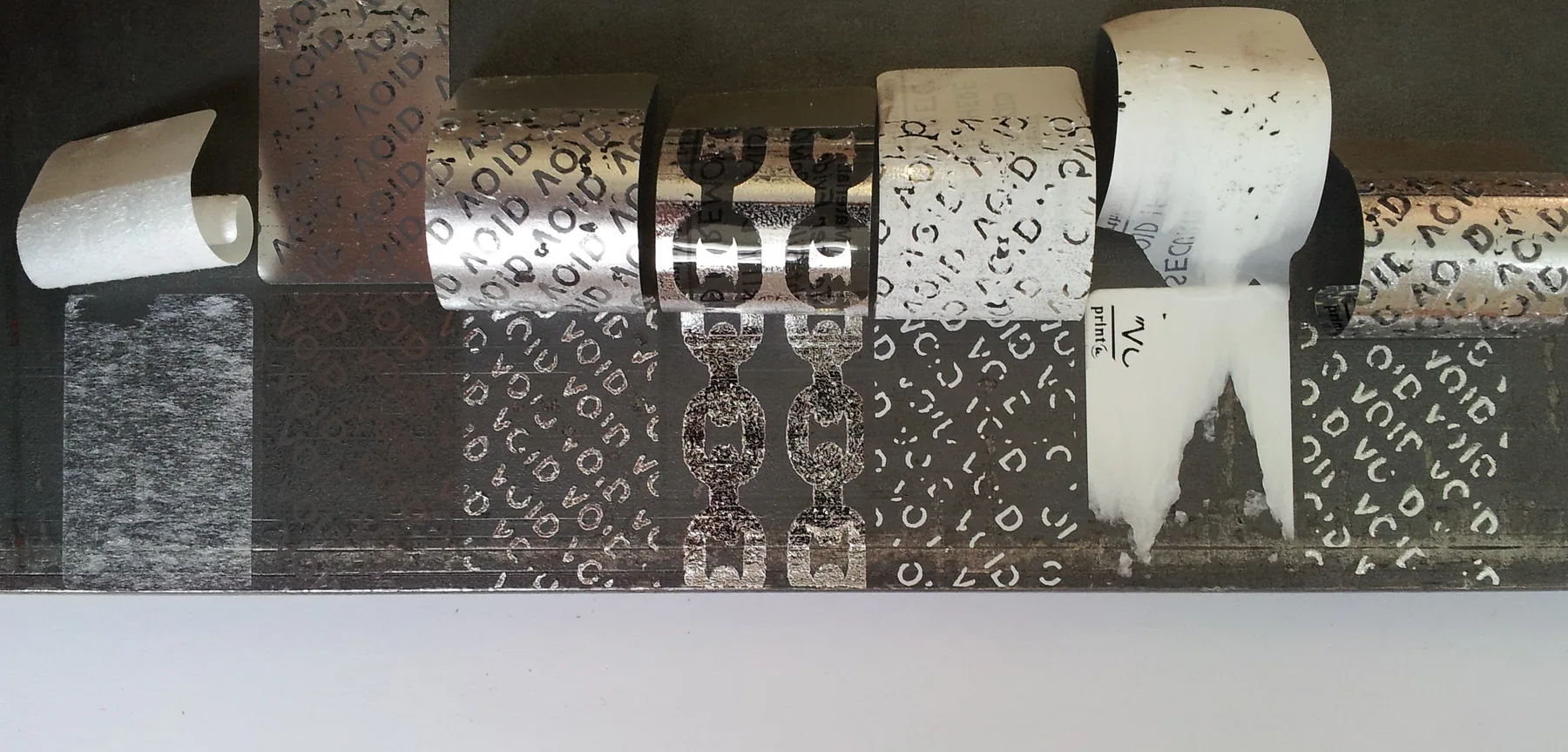
The following are actual photographs supplied by Northern Labels; they are not generic AI-generated factory images.
Tamper-evident identification
Tamper indicators for fasteners, enclosures and equipment where opening or interference must be evident.
Custom slitting and rewinding
Tailoring finished roll widths, counts, winding orientation and core sizes to production equipment.
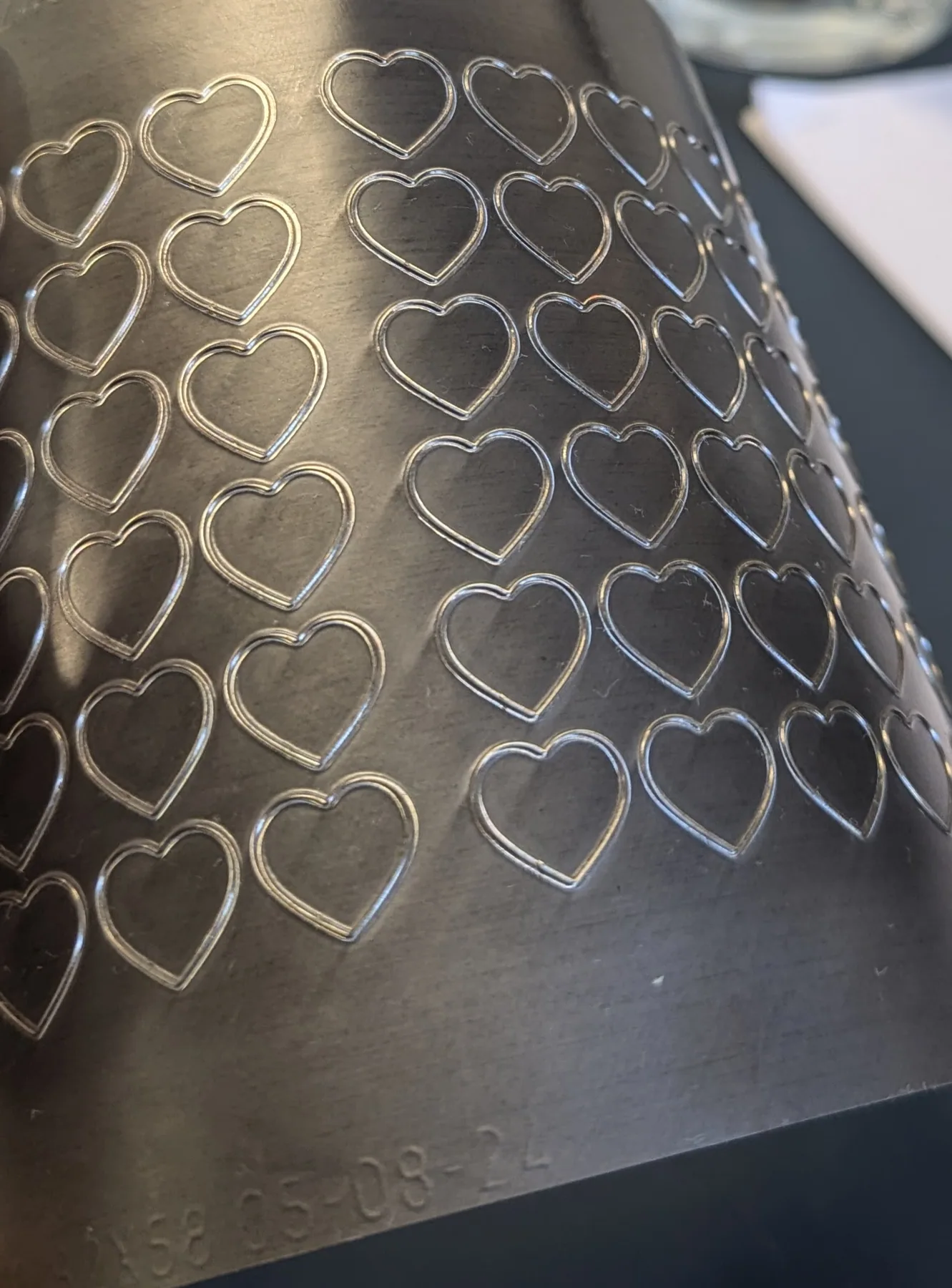
Special shapes and constructions
Dies, embossing and non-standard converting are options to discuss alongside the printing requirements.
Actual slitting and finishing.Tamper-evident manufacturing.Tamper-evident fastening.Custom shape cutting.Specialist printed industrial labels.Industrial use.
Talk to the people who make your labels.
Tell us what you are labelling, how it will be used, and the quantities you need. We can discuss a practical specification.