NORTHERN LABELS · NORTH YORKSHIRE MANUFACTURING
Consistency doesn't happen by accident.
We combine conventional printing and specialist converting equipment with careful maintenance, controlled materials and the manufacturing experience needed for dependable repeat orders.
How we look after quality ↓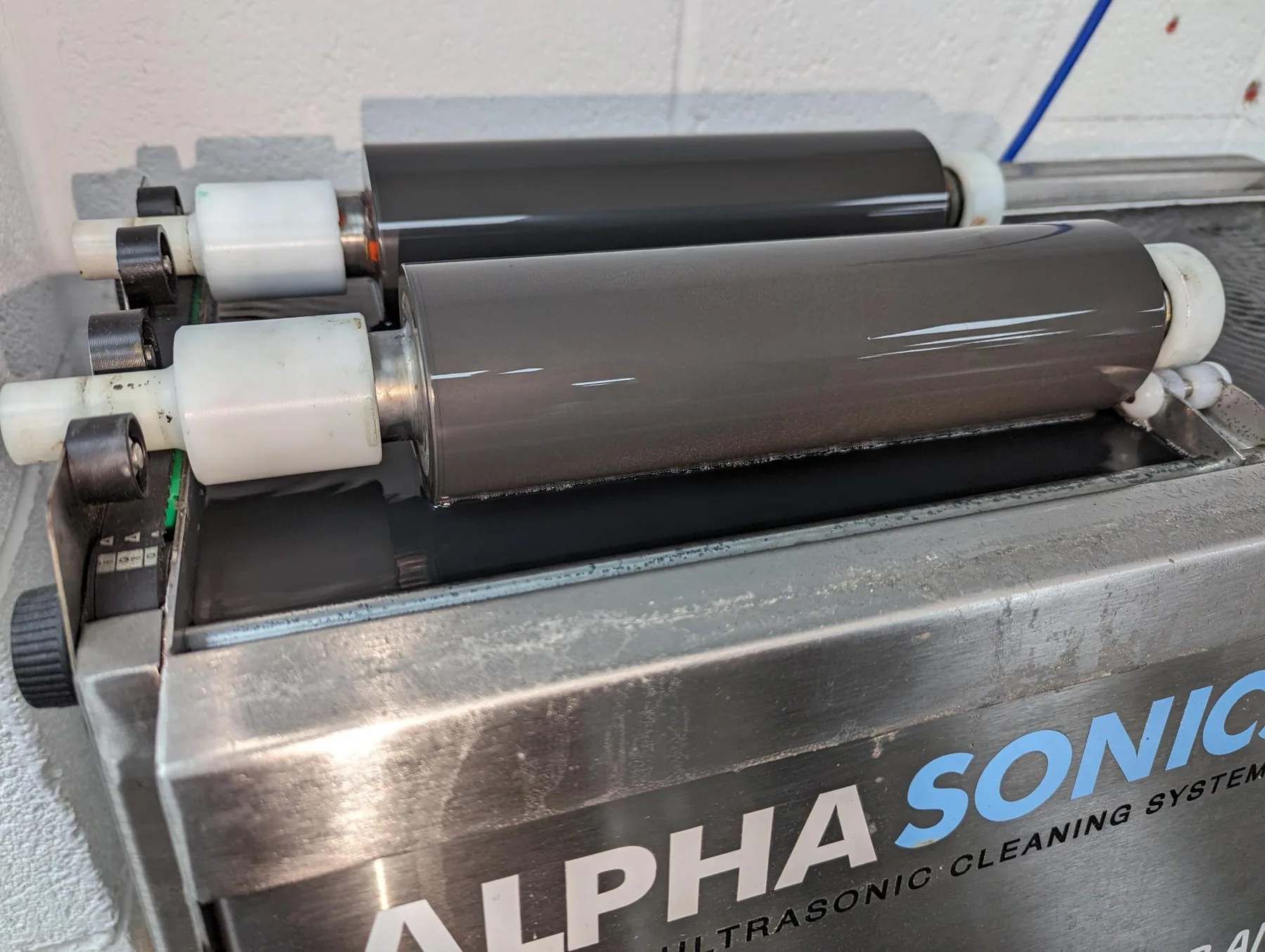
PRINT QUALITY · TOOLING · MATERIAL CONTROL
Quality is built between the print runs, not just during them.
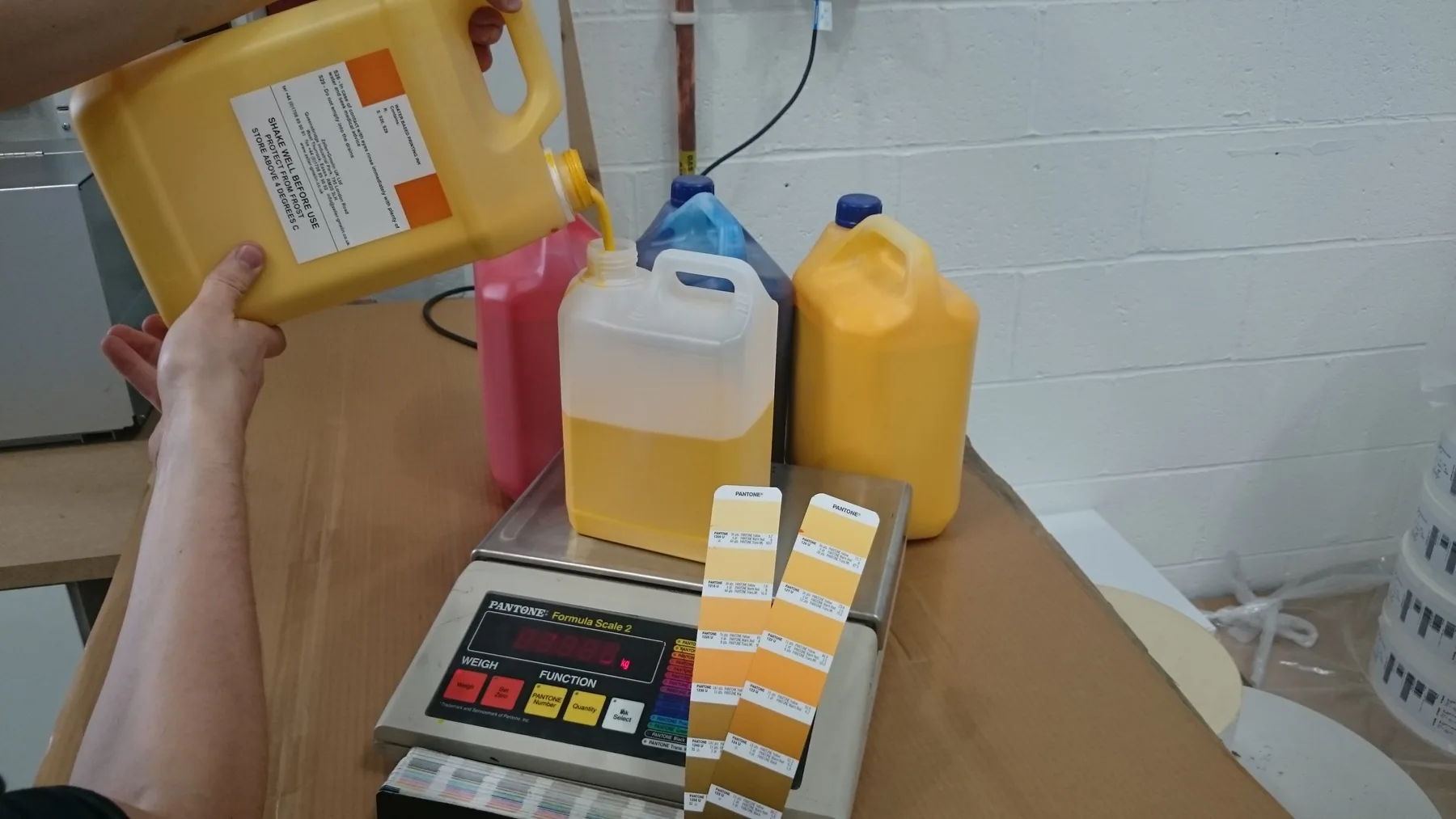
We have a wide range of printing, cutting and converting tools at our disposal. Looking after them is part of our everyday approach to manufacturing. When we make a label for the second, tenth or hundredth time, we want the specification and production method to remain as consistent as possible.
That means maintaining our equipment, checking the condition of tooling, protecting the release liner and keeping control of approved materials. The details can make the difference between a roll of labels that looks right and one that also runs reliably on your machinery.
01 / PRINT CONSISTENCY
Clean anilox rolls. More consistent printing.
In conventional printing, the condition of the anilox roll matters. Ink can build up in its cells over time and affect the amount transferred during printing. Our routine maintenance includes ultrasonic cleaning of anilox rolls to help maintain dependable ink transfer and consistent colour on repeat work.
It's less glamorous than a shiny printing press, but it's an important part of keeping a proven job looking like the last one.
02 / DIE-CUTTING ACCURACY
A cleanly cut label. A liner that stays intact.
The cut must go through the label face material without unnecessarily cutting into the backing liner. A liner weakened by excessive die penetration can snap during automatic application, even when the finished labels initially appear perfectly acceptable.
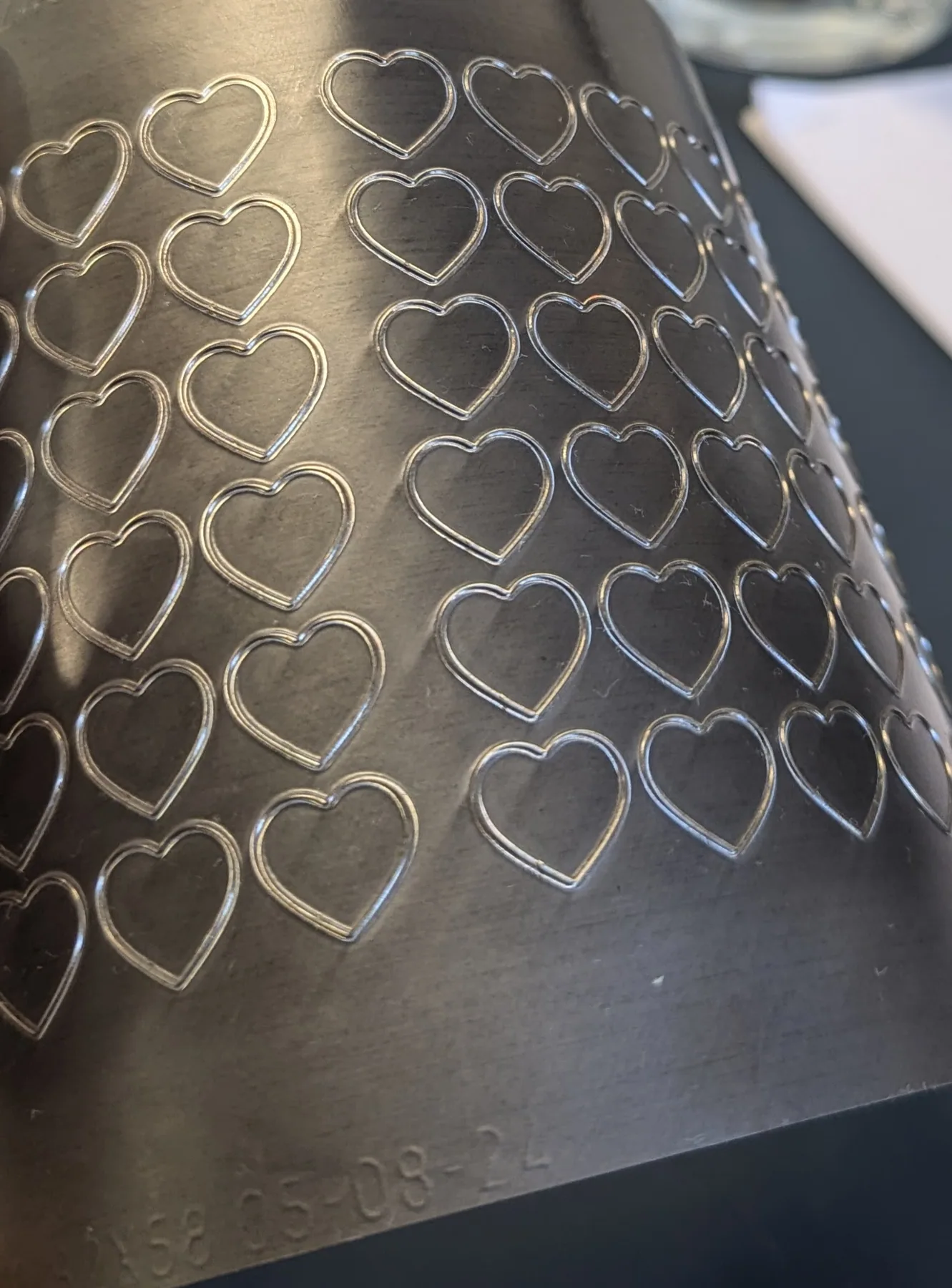
We regularly review our magnetic-cylinder and cutting-die collection, checking tooling condition and suitability so that repeat work can be produced with appropriate cutting performance. We consider how labels will behave on your machines, not just how they look when they leave ours.
03 / APPROVED MATERIALS
An approved specification should stay approved.
When a customer has an established, approved product, we aim to keep the specified materials in stock for continuity. We don't casually substitute a different face material, adhesive or liner just because it happens to be available.
If a genuine supply difficulty or unavoidable technical issue makes a change necessary, we document it properly and discuss it with the customer before proceeding. Materials that look similar on paper don't always behave identically in service, so continuity matters.
What we aim to protect
- Consistent label appearance
- Adhesion and application performance
- Reliable liner and roll handling
- Clear records of any necessary change
04 / SLITTING & PRESENTATION
Finished to work on your equipment.
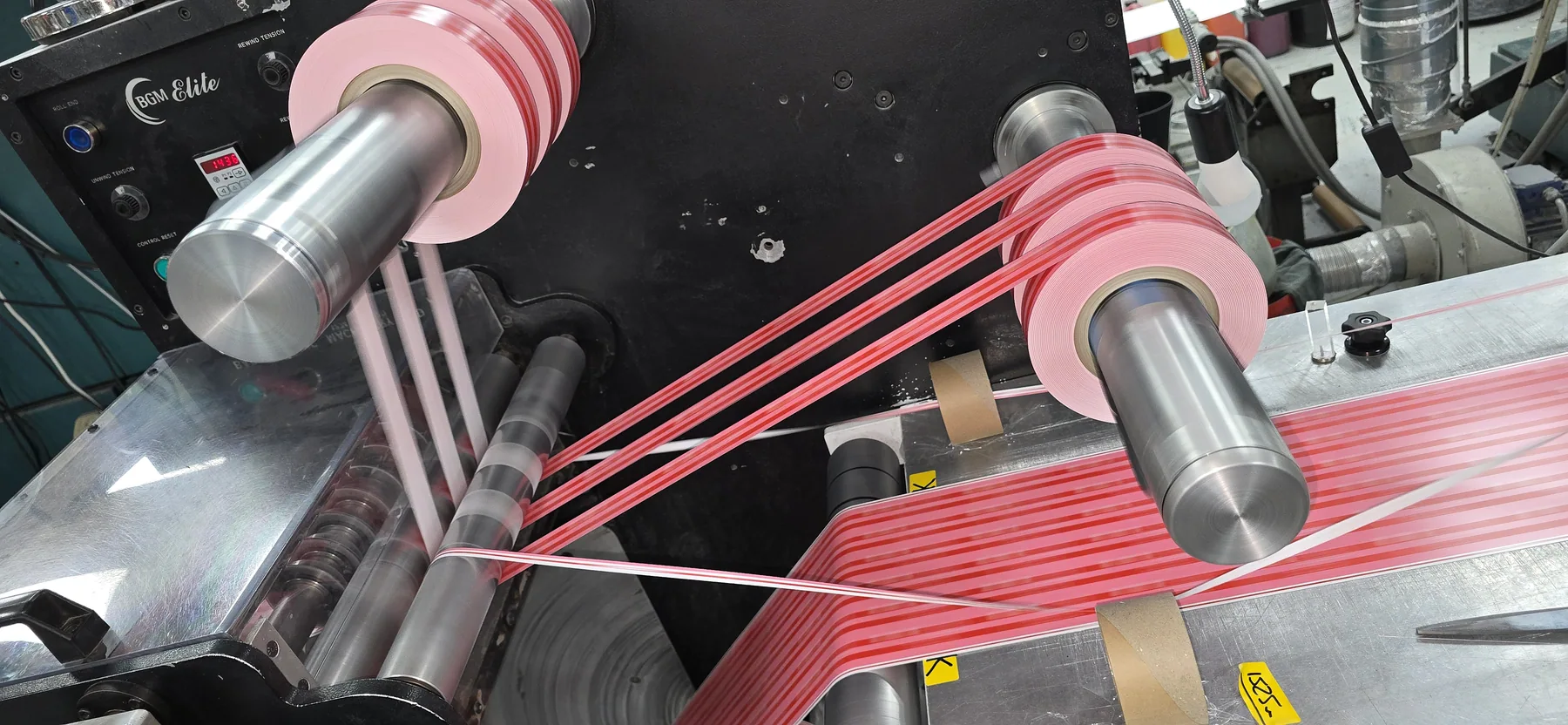
Because we manufacture and convert labels in-house, we can discuss the roll specification as part of the job, including slit width, core diameter, winding direction, quantity per roll and outside roll diameter.
We also work with specialist shapes, perforations and converting requirements where the standard choice isn't the right choice. The goal is to supply rolls that are practical for the way you will actually use them.
Explore the roll size calculator ↗LET'S GET THE SPECIFICATION RIGHT
Manufacturing decisions based on the job, not a fixed menu.
Quantity, colours, materials, adhesive, finish and how the labels are applied all influence the right production method. We can combine conventional printing, hot foiling, die-cutting and specialist finishing to suit your requirements.
Talk to the people who make your labels.
Tell us what you're labelling, how it will be used and the quantities you need. We can discuss a practical specification and how to keep repeat orders consistent.
Request a quotation → Email the team